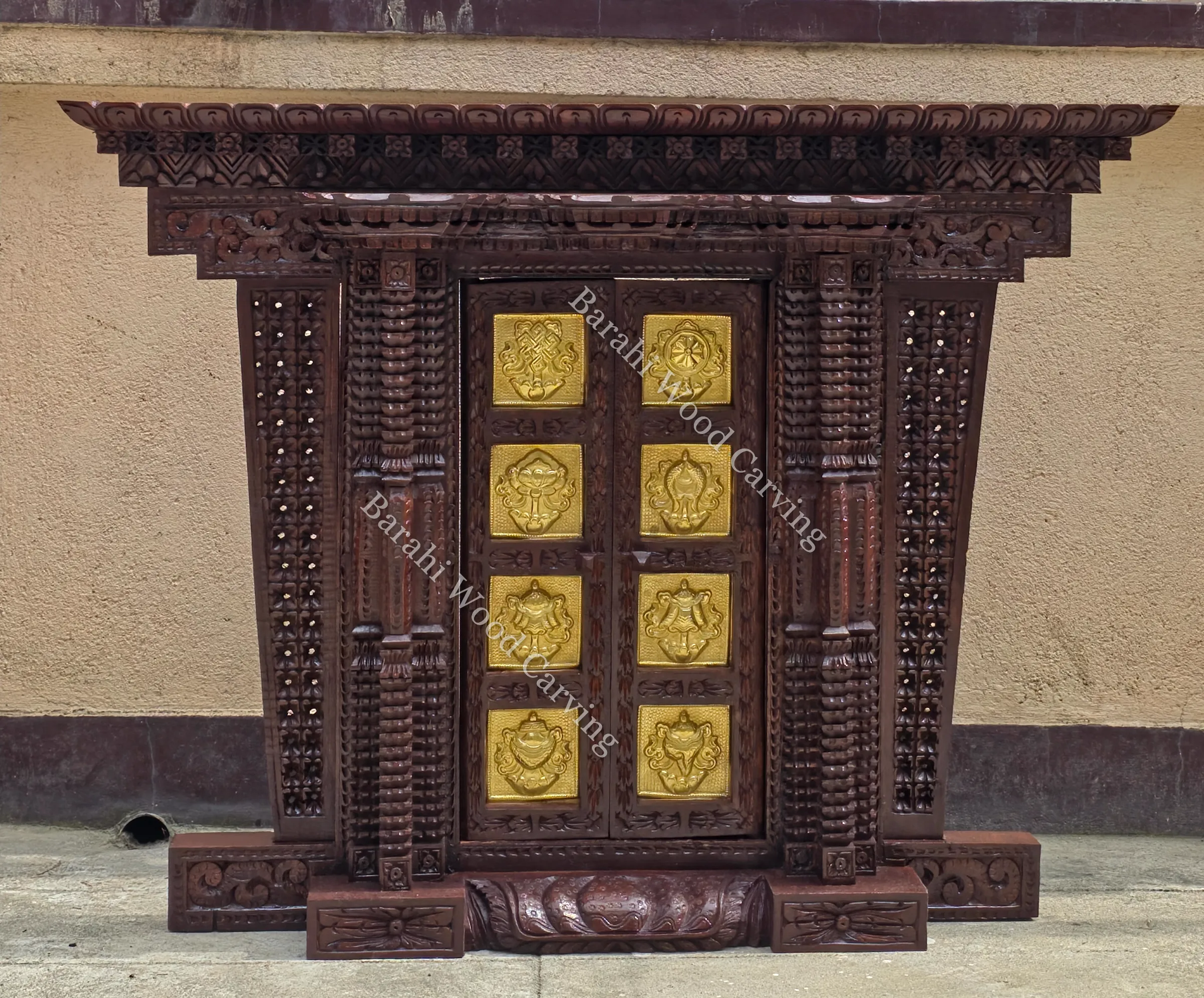
Ashtamangala Door
Hand-carved Nepalese wooden door replica with brass panels depicting eight sacred Buddhist symbols.
- Wood
- Yellow Teak/Brass
About this piece
The Ashtamangala Door features a multi-tiered top mantle with lotus leaf carvings, vertical side posts sculpted with repeating pillar patterns, and surrounding lattice (tikijhyā) screens.
Together, the eight panels completes the Ashtamangala—the eight sacred symbols of good fortune. In Buddhism, they represent the offerings made by the gods to Shakyamuni Buddha after he gained enlightenment.
The Parasol (Chatra): Represents royal protection, spiritual shelter, and defense against harmful energies, illness, and suffering.
The Pair of Golden Fish (Matsyayugma): Symbolizes freedom, fearlessness, happiness, and abundance as creatures moving freely through the ocean of existence.
The Treasure Vase (Treasure Jar / Kalasha): Represents unlimited wealth, prosperity, long life, and spiritual fulfillment that never diminishes no matter how much is shared.
The Conch Shell (Sankha): Symbolizes the far-reaching and melodious sound of spiritual teachings, awakening practitioners from ignorance.
The Lotus Flower (Padma): Symbolizes ultimate purity of mind, body, and spirit, growing unblemished out of the muddy waters of worldly existence.
The Endless Knot (Srivatsa): Represents the interconnectedness of all things, infinite wisdom, ultimate harmony, and eternal union.
The Victory Banner (Dhvaja): Symbolizes the triumph of wisdom over ignorance, enlightenment over obstacles, and victory over inner negative forces.
The Wheel of Law (Dharmachakra): Symbolizes the continuous motion and dissemination of spiritual wisdom, cosmic order, and noble path to truth.